
Why Early Childhood Education Is Important for Brain Development
Home / School / Why Early Childhood Education Is Important for Brain Development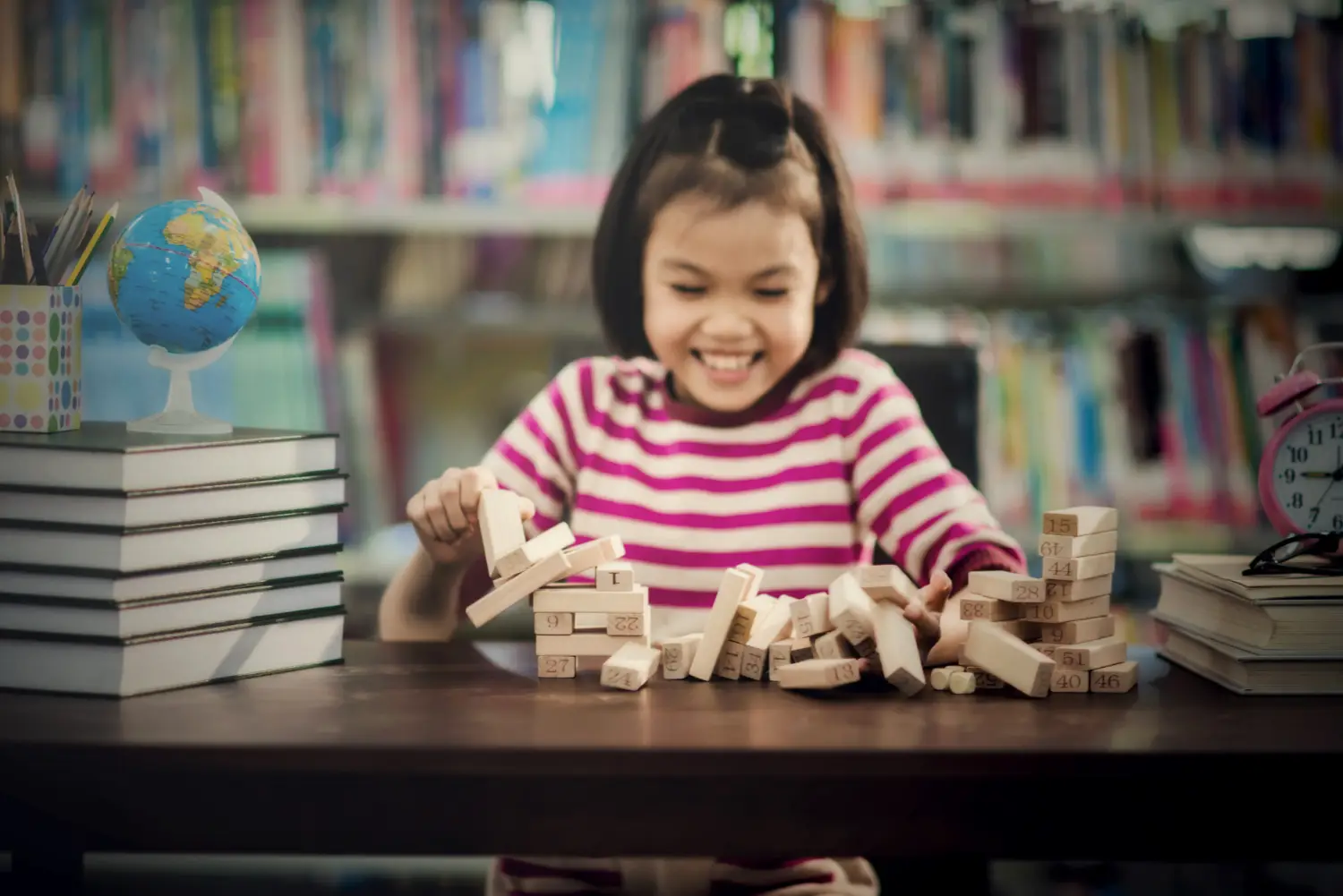
Child education is a very important topic, and most of the parents are in a dilemma of how to educate their child at an early age. Most of us hardly realise that a child’s brain grows before the age of five. In fact, about ninety percent of brain development happens during these early years. Therefore, choosing the best school in BHEL plays a vital role in supporting a child’s brain and emotional growth.
Early education does not mean that you thrust a pile of books into a bag and impose it onto a tiny shoulder. It is about connecting the tiny brain gently and patiently, and helping it to create the foundation for your tiny thinker and learner. When you talk to children below five years of age, it means you start connecting their brain, and when you allow them to express themselves in their babbling way or sing or listen to stories, their brain connections grow quickly, and they start thinking, imagining, and developing healthily. Some of the best CBSE schools in BHEL realise this transition and structure their way of educating children accordingly.
MNR School of Excellence in BHEL, Hyderabad, offers quality education for children from the Nursery level up to Class 10. With a strong focus on academic excellence, holistic development, and values-based learning, MNR School of Excellence, widely known as one of the best schools in BHEL, nurtures young minds at every stage. MNR School of Excellence in Bhel prepares students with confidence, skills, and character to succeed in school and beyond.
What Really Happens Inside A Young Child’s Brain?
Brain development during the early years is rapid. Nerve cells connect with each other through pathways. These connections grow stronger when children speak, listen, move, and explore their surroundings. When a child repeats a rhyme for the tenth time, something important is happening. Memory is strengthening. Rhythm is sharpening attention. Language is becoming natural.
Strangely enough, during classroom observations, it becomes clear that children who talk freely at age four often raise their hands without hesitation in later grades. That courage does not appear suddenly. It grows from repeated chances to speak in a safe environment.
In a well-run CBSE school in BHEL, children are not hurried through lessons. They are guided through experiences. They are allowed to get access to various activities like story circles, clay modelling, simple sorting games, and many other things. And during these activities, their keen interest is observed silently, their bubbling curiosity and laughter are heard smilingly at some top-rated schools in Bhel. Each activity of children activates different parts of the brain. When these experiences are consistent, neural connections grow firm. These small habits reflect deep mental preparation.
Why Does Structured Early Learning Matter So Much?
Some parents believe that learning at home is enough. Home learning is warm and valuable. Yet structured group environments offer something different.
Children benefit from:
- Guided Interaction: Teachers model conversation, helping children form clear sentences and respectful listening habits.
- Routine And Rhythm: Predictable schedules create emotional security. A secure child learns faster.
- Balanced Play: Activities are planned with purpose, even if they appear simple.
- Peer Exposure: Sharing space with classmates builds patience and empathy.
There is something powerful about watching a group of five-year-olds negotiate who will hold the picture cards during a storytelling game. They argue softly. They adjust. They compromise. These moments train the brain’s executive functions, which are the skills that help manage emotions and decisions.
A thoughtful preschool in Bhel understands that learning is layered. Numbers and letters are introduced gradually, but behaviour and communication are shaped every single day.
Is Play Truly That Important For Brain Growth?
Play sometimes gets dismissed as free time. It is not. Play activates imagination, strengthens memory, and supports emotional balance.
Consider block building. A child attempts to stack pieces. The tower falls. The child tries again. That is problem-solving in action. The brain learns cause and effect. Frustration is felt, then managed.
Play supports:
- Logical Thinking: Puzzles and sorting games sharpen reasoning.
- Creativity: Pretend play encourages abstract thinking.
- Emotional Control: Winning and losing teach resilience gently.
- Language Development: Role play encourages spontaneous dialogue.
During project sessions in early primary grades, teachers often notice that children who experienced rich play earlier participate more actively. They suggest ideas. They volunteer for small responsibilities. Confidence is visible in posture and voice.
How Does Early Education Influence Future Success?
 The benefits of early education extend far beyond the early years. Literacy and numeracy skills develop more smoothly when the brain has been carefully prepared during childhood. Literacy means reading and understanding language. Numeracy means feeling comfortable with numbers, patterns, and basic mathematical thinking.
Children who have enjoyed early storytelling often approach reading with natural curiosity and confidence. They see books as friends rather than challenges. Those who have played counting games, sorted shapes, and explored patterns tend to handle basic mathematics with far less fear. When learning begins with joy, it creates a lasting foundation.
At the MNR School of Excellence, the best-known school in BHEL, early education is designed to nurture both academic readiness and emotional growth. Structured storytelling sessions, interactive number activities, and guided classroom participation help children build confidence step by step. The focus is not on rushing milestones, but on strengthening the foundation.
Yet academic skill is only one part of the picture. Emotional strength matters equally. A child who learns to manage small disappointments during play group is more likely to handle exam results calmly later in life. A child who waits for their turn, shares materials, or resolves small conflicts peacefully develops resilience. That emotional stability begins in the early years.
Parents sometimes focus on visible milestones such as reading full sentences at an early age. However, the deeper milestone is independence. When a child completes a small classroom task without constant reminders, that quiet discipline becomes invaluable in later grades. Independence builds responsibility. Responsibility builds confidence. Confidence builds success.
Early education is not just preparation for school—it is preparation for life. The habits formed in those formative years quietly shape academic performance, emotional balance, and future achievements.
A Thoughtful Beginning
Early childhood education is not a race to impress. It is preparation for a long journey. Brain development during the first six years lays the foundation for thinking, behaviour, and confidence. A nurturing kindergarten provides the rhythm, guidance, and safety that young minds need. When children step into the MNR School of Excellence, the best-known school in BHEL, they carry with them focus, communication skills, and emotional balance.
Please visit our Youtube Channel: https://www.youtube.com/channel/UCtvp7siWubSupIT2goQ3bkA
Related Blogs

Sharing And Caring: Building Strong Values In Early Childhood
Before reading this blog, imagine a visual of two small children simply arguing over a…

10 Smart Parenting Tips for School-Age Children
A child today grows up in a world that moves quickly. Classrooms are changing, learning…

How to Help Children Develop Critical Thinking and Problem-Solving Skills: A Simple Guide from Top CBSE Schools in Hyderabad
Overview Parents can help children build critical thinking and problem-solving skills in four simple ways….

How Time Management Can Transform Your Child’s Academic Journey at CBSE Schools in BHEL
There is a moment every parent knows too well. It is 10 at night, the…

Importance of Sports and Extracurricular Activities in Schools
A school day does not end when the last bell rings. In many ways, it…

How Punctuality in State Board Schools in BHEL Helps Children Thrive!
There is no doubt at all that punctuality plays a pivotal role in shaping our…